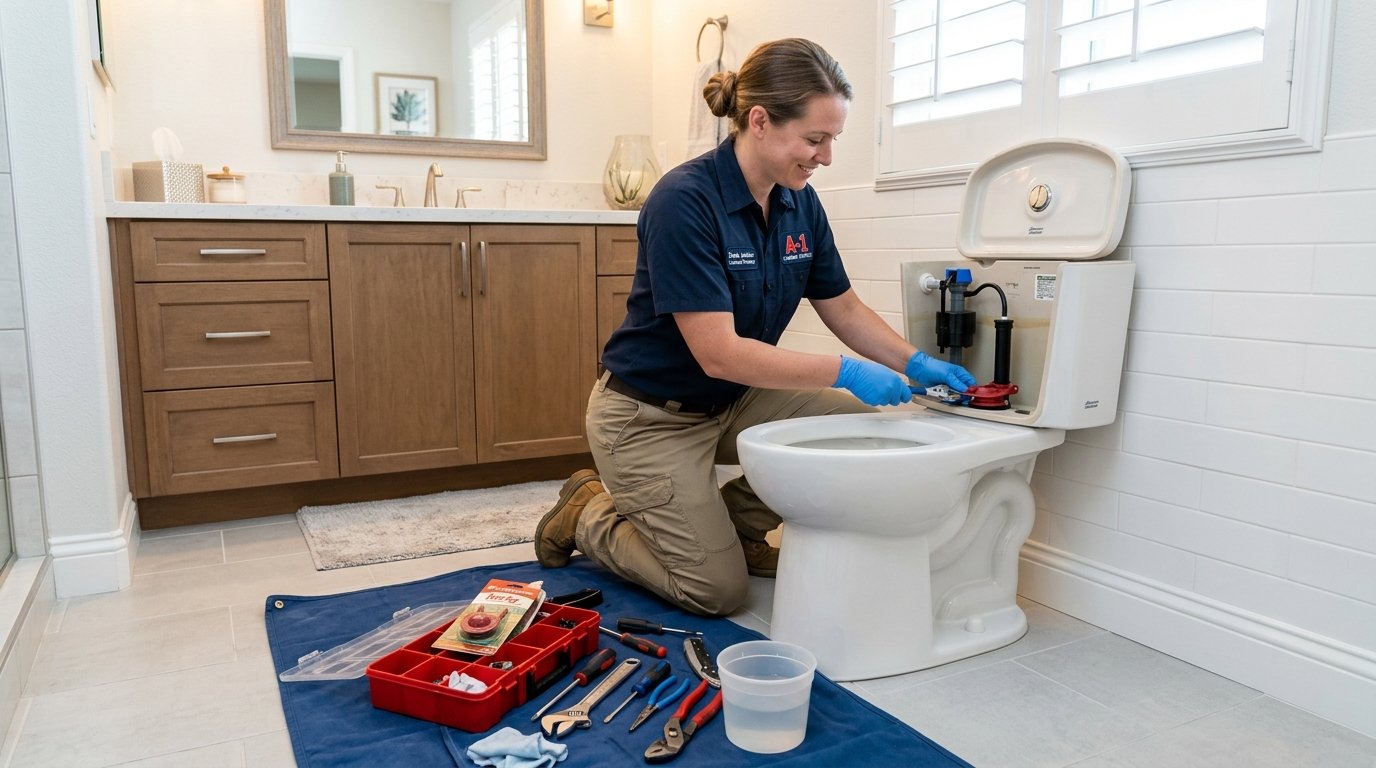
Few household plumbing crises trigger panic quite like watching the water level inside your toilet bowl rise rapidly after a flush. In a matter of seconds, unsanitary water can spill over the porcelain rim, soaking baseboards, grout, subflooring, and leaking into the rooms below.
Do not freeze or run for towels while the water is still actively rising! You have 3 to 5 seconds to halt the overflow before a single drop touches your tile. Here is the master plumber protocol to stop the flood instantly.
⚡ The 3-Second Rule: How to Halt the Water
Method A (Fastest): Take off the tank lid. Reach inside the clean water tank and push the rubber flapper valve down flat over the flush hole. This immediately cuts off water flowing into the bowl.
Method B: Reach behind the bottom left side of the toilet base. Locate the oval metal handle (the angle stop shutoff valve) and twist it firmly CLOCKWISE until it stops.
Why Did the Toilet Overflow in the First Place?
1. "Flushable" Wipes and Feminine Hygiene Products
Despite marketing claims, "flushable" wet wipes do not dissolve like standard toilet paper. They are woven with synthetic cellulose fibers that snag on rough cast-iron pipe interiors or tree roots, creating an impervious plug within your bathroom trapway.
2. Misadjusted or Warped Float Mechanism
If the fill valve float ball or cylinder inside the upper tank is set too high, excess water constantly trickles into the overflow tube. Combined with a partial downstream clog, this triggers an uncontrolled overflow when flushed.
3. Foreign Object Trapped in the Internal S-Trap
Toilet bowls are cast with an internal curving ceramic "trap" designed to hold a water seal against sewer gases. Children's toys, toothbrushes, razor caps, or dense paper towels can lodge inside this internal bend, catching waste and causing sudden backups.
4. Blocked Rooftop Plumbing Vent Stack
Every plumbing fixture requires an atmospheric air vent leading out through your roof. If birds build nests, or leaves accumulate inside the vent stack on your roof, water draining cannot draw air. This creates negative pressure that chokes drain flow, making toilets sluggish and prone to backups.
5. Main Sewer Lateral Blockage
If water bubbles or surges upward into your bathtub or shower when the toilet overflows, the blockage is not inside the toilet at all—it is located in your 4-inch main sewer line due to tree roots or heavy grease accumulation.
Pro Plunging Tricks You Need to Know
- Use a Flange Plunger, NOT a Flat Sink Cup: Standard flat red suction cups are for flat sink basins. A true toilet plunger features an extended rubber neck (flange) that inserts securely into the toilet trapway to form an airtight hydraulic seal.
- The Petroleum Jelly Seal Trick: Smearing a thin layer of Vaseline around the rim of your plunger flange ensures a completely airtight seal against the slick porcelain, multiplying your downward hydraulic force by 300%.
- Push AND Pull: The magic of plunging is not just pushing forward; the rapid upward pull creates a suction vacuum that dislodges foreign obstructions and pulls them back into the bowl where they can be removed.
Need Professional Toilet Repair or Auger Service in Santa Ana?
When plunging fails, professional mechanical augering, toilet flange rebuilding, or main sewer clearing is required:
- Toilet Repair & Replacement Services — Rebuild leaking tanks, replace wax rings, and install Toto/Kohler toilets.
- Drain Cleaning & Rooter — Heavy-duty motorized snake clearing for deep mainline blockages.
- 24/7 Emergency Plumbing Dispatch — Fast 15–25 min response to prevent structural water damage.